Why a paper filter changes the cup
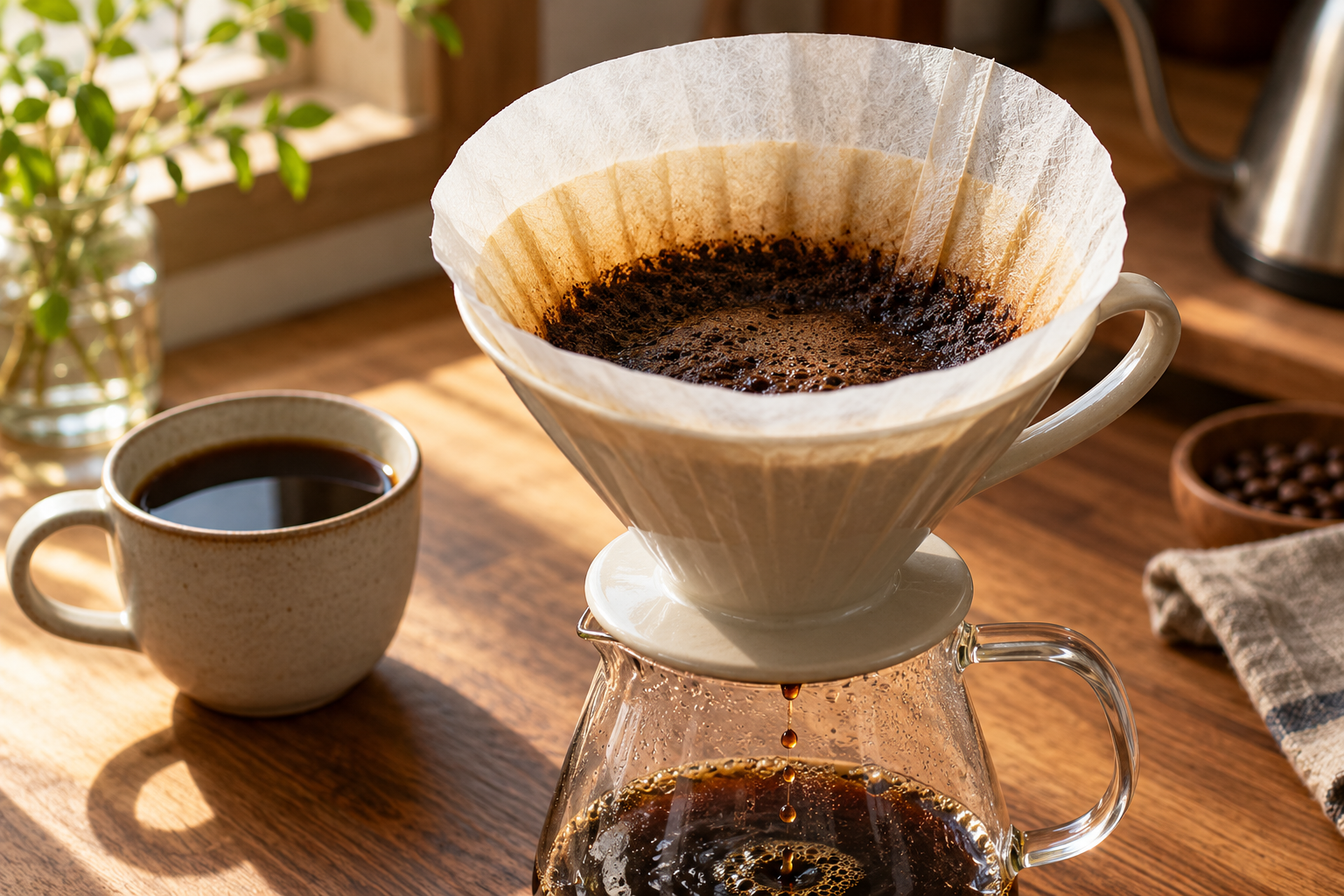
Paper changes coffee through particle retention, flow resistance and, sometimes, its own flavour. Measurements of coffee diterpenes show why the familiar claim that paper simply absorbs every oil is too crude.

About the author
I make coffee at home in Glasgow and work as a museum technician. My interest began with a simple brewer and the question of why a familiar bag of beans sometimes produced a cup I liked more. I gradually replaced a collection of vague impressions with a small notebook of changes worth repeating.
Brew & Bloom is about modest coffee experiments and the routine around them. I write about keeping a method recognizable, changing one detail at a time and remembering that an enjoyable drink is the purpose of the equipment. I appreciate a useful measurement but have little interest in turning breakfast into an examination.
My coffee corner shares space with plants, mugs and whatever was left on the kitchen counter the night before. Outside brewing I enjoy repairing household objects, visiting small exhibitions and inviting friends to a tasting that remains perfectly compatible with biscuits and an ordinary conversation.
Paper changes coffee through particle retention, flow resistance and, sometimes, its own flavour. Measurements of coffee diterpenes show why the familiar claim that paper simply absorbs every oil is too crude.
A flat or sharp cup can come from uneven flow through the grounds, from water's mineral balance, or from both. The evidence points to bicarbonate as a strong sensory variable while setting limits on simple hardness rules.
I had changed the coffee, the grind setting, the amount of water and the cup. The result tasted different. My notebook, displaying admirable restraint, declined to tell me why.
I own three mugs that turn the same kitchen into three slightly different mornings. One has a generous handle. One keeps reminding me how much I like its glaze. The third is ordinary in every